Thirty Something

Elevated style for your thirties

Building Your Forever Jewelry Collection in Your 30s

2026-07-14

Quick Answer: A forever jewelry collection is 8 to 12 pieces that work daily, layer together, and outlast trends. Start with four: hoops in your ideal size, a fine chain necklace, a simple ring, and small studs. Buy solid gold or quality vermeil for anything with constant skin contact, and save plated pieces for occasional statements.

Somewhere in your thirties, jewelry quietly changes category. It stops being a trend haul and becomes a small set of things you don’t take off.

That shift is one of the decade’s better pleasures, and it’s mostly about buying less, more deliberately.

Building Your Forever Jewelry Collection in Your 30s

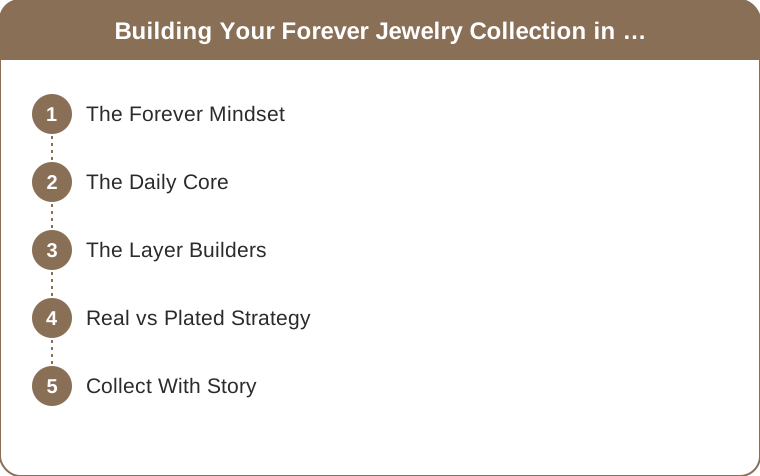
At a glance

What Does a Forever Jewelry Collection Look Like?

Small. Eight to twelve pieces total, chosen so that every piece works with every other piece.

Three criteria decide whether something belongs:

It works daily. Not “for special occasions.” If it’s going to live in a box, it doesn’t count toward the core.

It layers. Pieces need to combine — necklaces at different lengths, rings that stack, earrings that pair with a chain rather than competing with it.

It outlives trends. Which in practice means simple shapes, quality metal, and nothing tied to a specific year’s aesthetic.

The mindset shift underneath: quality metal over quantity, and meaning over impulse. This collection is meant to attend the rest of your life, which is a genuinely different purchasing brief from “goes with this outfit.”

What Are the Four Core Pieces?

These four do roughly 80% of the work, and they’re the right place to spend.

1. Great hoops in your size sweet spot. Everyone has one — for most people it’s somewhere between 15mm and 30mm. Find yours by trying several, then buy that size in solid gold or heavy vermeil. You’ll wear them hundreds of times a year.

2. A fine chain necklace. 16 to 18 inches, worn alone or as the base of a layer. This is the single most-worn item in most collections.

3. A signet or simple band ring. Something with presence that isn’t fussy. It reads intentional in a way a delicate stacking ring alone doesn’t.

4. Small studs. For the days when hoops are too much — travel, workouts, sleeping in them. Diamonds if that’s your budget, but a plain gold ball or a small pearl works just as well.

Buy these in solid metal or good vermeil, because they’ll be in contact with your skin daily and go through showers, workouts, and sleep. This is the category where plating fails fastest and most visibly.

Building Your Forever Jewelry Collection in Your 30s

What Do You Add Next?

Four builders that expand the vocabulary without breaking the cohesion.

  • A second necklace length — 20 to 24 inches, so you can layer two chains without them tangling
  • A bolder chain — something with visible links, for days when the fine chain disappears against a knit
  • Stacking rings — two or three thin bands that work alone or together with the signet
  • A cuff or tennis-style bracelet — the piece that dresses up a plain outfit fastest

The one rule that keeps this coherent: stay in one metal tone for the core. Mixed metals can look great, but it’s an advanced move that works best when it’s clearly deliberate rather than accumulated. Pick gold or silver as your base and let everything in the core belong to it.

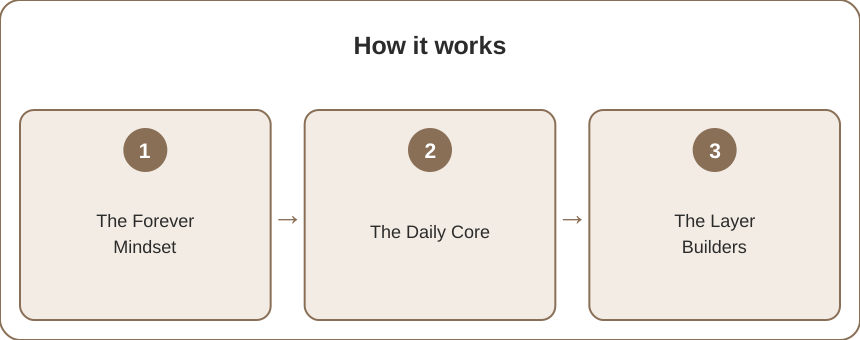
How it works

What Nobody Tells You About Buying Real Jewelry

Vermeil and gold-plated are not the same thing. Vermeil requires a sterling silver base and a thicker gold layer (2.5 microns minimum in the US). Plated can be a base metal with a coating measured in fractions of a micron. The price difference reflects a real durability difference.

Gold-filled sits between them and is genuinely good value — a bonded layer that’s substantially thicker than plating and holds up for years of daily wear.

14k is the daily-wear sweet spot. 18k is softer and scratches more readily; 14k has enough alloy to be durable while still looking properly gold.

Spend where skin contact is constant. Daily rings, everyday earrings, and the chain you never remove justify solid metal. A statement piece worn six times a year does not — quality plated is a sensible trade there.
Nickel is the usual culprit for irritation. If earrings bother you, look for nickel-free or higher-karat gold rather than assuming you can’t wear metal.

And the resale value argument is mostly a myth for anything but gold by weight. Buy because you’ll wear it, not as an investment.

How Do You Build It Over Time?

Slowly, and attached to things.

Mark milestones with pieces — the promotion, the birthday, the year something changed. There’s a practical reason beyond sentiment: meaningful jewelry gets worn, and random jewelry gets drawered. A ring you bought to mark something has a reason to come out every day.

One or two additions a year is a perfectly good pace. In ten years that’s a complete collection, each piece with a date attached, and none of it bought in a hurry.

Care is simple: warm water, a drop of mild soap, a soft brush for chains, and store pieces separately so they don’t scratch each other. Take rings off for the gym and for anything involving chlorine.

Mini FAQ

How many pieces should a jewelry capsule have?

Eight to twelve is a good target — four core daily pieces plus four to six builders. Small enough that everything gets worn, varied enough to cover any occasion.

Is gold vermeil worth buying?

Yes, for most people. Vermeil requires a sterling base and a much thicker gold layer than standard plating, so it holds up to regular wear at a fraction of solid gold’s cost.

Should you buy 14k or 18k gold?

14k for daily wear — the extra alloy makes it more scratch-resistant. 18k has a richer color and suits occasional pieces, but it’s noticeably softer on something you never take off.

TL;DR:

  • Aim for 8-12 pieces that work daily, layer together, and aren’t tied to a trend.
  • Core four: hoops in your ideal size, a fine chain, a simple ring, small studs.
  • Buy solid gold, 14k, or quality vermeil for anything with constant skin contact.
  • Stay in one metal tone for the core so everything combines effortlessly.
  • Attach pieces to milestones — meaningful jewelry gets worn, random jewelry gets stored.

Build slowly, wear constantly, and own a collection that outlives every trend cycle ahead of it.

Keep Reading

This article is for general styling and informational purposes only. Trends, sizing, availability and pricing may vary by brand and season.

jewelrythirtiesinvestment

← All articles