How to Nail Your Style in Your Thirties
Quick Answer: Nailing your thirties style comes down to defining a signature look you can repeat. Photograph the outfits you actually feel good in for a month, find what they share — silhouette, colour, level of structure — and build deliberately toward that. Then invest in quality, get things tailored, and let trends in selectively.
There’s a specific kind of frustration that arrives around 32.
You own plenty of clothes. Many of them are perfectly nice. And you still stand in front of them at 7:40am with the distinct feeling that none of it adds up to anything — that you’re wearing a collection of individually acceptable decisions made by several different people.
The missing piece usually isn’t more clothes. It’s a point of view.

How Do You Find Your Personal Style?
By looking at evidence rather than inspiration. Mood boards tell you what you admire; your own wardrobe tells you what you actually wear.
The month-long photo test. For four weeks, take a quick phone photo of every outfit you leave the house in, and note whether you felt good in it. No styling, no effort — just the record.
At the end, sort them. The ones you felt good in will have things in common, and they’re rarely what you’d have predicted:
- Silhouette. Are the good ones fitted on top and loose below? Structured all over? Long lines?
- Colour. Which colours keep appearing in the good pile and which only appear in the bad one?
- Structure level. Do you feel best in something tailored, or something soft?
- Detail volume. Plain and quiet, or with something going on?
That’s your signature, extracted from data rather than aspiration. Most people find it’s narrower than they expected — and considerably narrower than what’s hanging in their wardrobe.
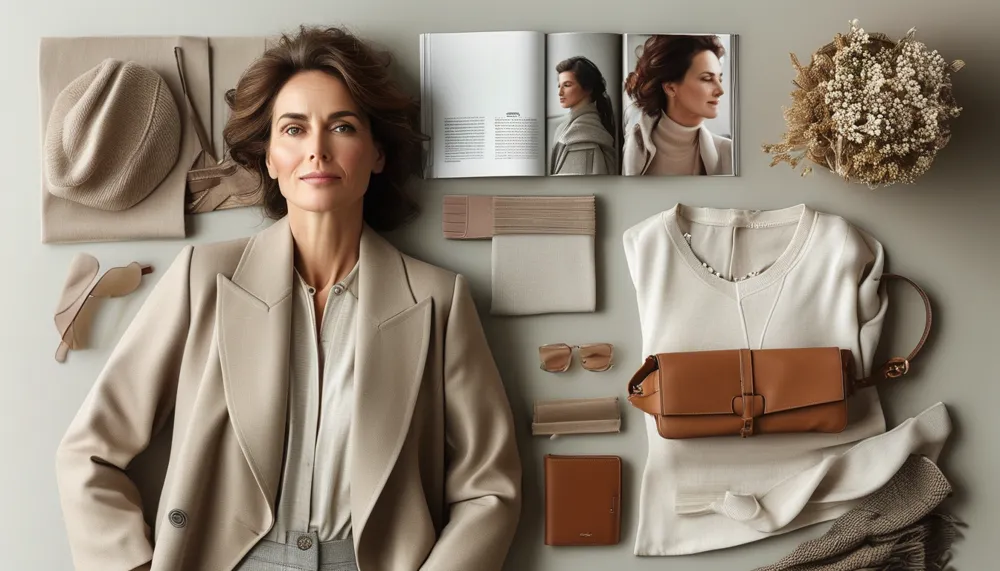
Then name it in a sentence. Something like “soft tailoring in warm neutrals” or “structured pieces, one colour, minimal jewellery.” A one-sentence brief makes every future purchase a yes or a no in about three seconds, which is where the real time saving lives.

Why Consistency Reads as Confidence
A recognisable style looks like a decision. A scattered one looks like a series of accidents, whatever the individual pieces cost.
This is why people with a strong signature look put together even in genuinely simple clothes — the coherence is doing the work. It’s also why the “I have nothing to wear” feeling persists in a full wardrobe: pieces that don’t share a point of view don’t combine, so a lot of clothes produce very few outfits.
The practical version: pick three neutrals and two accent colours. Buy within that palette. Within a season, everything you own works with everything else, and getting dressed collapses from a decision to a reflex.
Repeating outfits is not a failure, incidentally. It’s what people with good style actually do — they’ve found what works and they wear it. The pressure to never repeat is a social-media artefact, and it’s expensive.

Invest in Quality Over Quantity
Once you know your signature, investment becomes low-risk — you’re buying into a defined brief rather than gambling.
The order that works:
- A coat in your palette. Worn over everything for months.
- Well-made trousers in your best silhouette, hemmed properly.
- Shoes that go with most of your wardrobe.
- A daily bag in leather.
Buy these one at a time, slowly. And skip the “investment piece” that doesn’t fit your brief, however beautiful it is — that’s exactly the purchase that hangs unworn for three years.
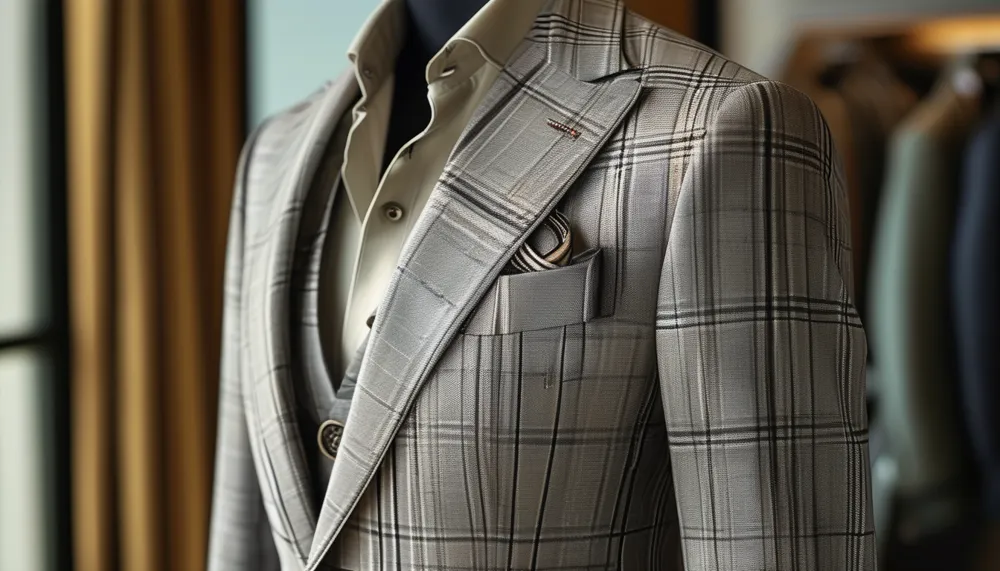
Fit is the multiplier. Find a tailor and use them. A hem, a taken-in waist, a shortened sleeve — each costs £15–25 and does more for how you look than anything you can buy at that price.
Keep One Foot in the Trends
Refined doesn’t mean frozen. A wardrobe with zero current pieces starts reading as dated even when every item is technically timeless.
The workable ratio: two or three current pieces a season, at lower price points, filtered through your signature. If your brief is soft tailoring in warm neutrals, you take the season’s silhouette shift and skip the neon. If it’s bold colour, you take the colour and skip the minimal cut.
That’s the whole trick — the trend serves the style, never the reverse.
5 Mistakes Everyone Makes Defining Their Style
1. Building from inspiration instead of evidence. A mood board records what you admire on other people. Your camera roll records what you actually wore and felt good in. Only one of those is your style.
2. Making the brief too broad. “Classic with a modern edge” rules nothing out, which means it helps with nothing. A useful brief should let you reject things in three seconds.
3. Copying a whole aesthetic wholesale. Adopting someone else’s complete look is how you end up with a wardrobe that fits a person who isn’t you — and it’s usually obvious within a fortnight.
4. Treating the signature as permanent. Bodies, jobs and routines change. Rerun the photo test every couple of years; a brief that fitted you at 31 may be quietly wrong at 36.
5. Buying the investment piece that’s off-brief. The beautiful thing that doesn’t fit your look is the single most reliable source of expensive regret in this decade.
Mini FAQ
How do you define your personal style?
Photograph every outfit for a month and note which ones felt good. Sort them and look for shared silhouette, colour and structure — the pattern in the good pile is your signature. It’s more reliable than any quiz or inspiration board because it’s based on what you actually wear rather than what you admire.
Is it bad to repeat outfits?
Not remotely — it’s what people with strong style do. A defined signature naturally produces repetition, and repeating a combination you know works is more stylish than rotating through forty mediocre options. The pressure not to repeat is mostly a social-media invention.
What if my style changed with my body or my life?
That’s normal and it’s exactly what the photo test is for — rerun it. Signature style isn’t a permanent identity; it’s a current working brief, and it should get revisited every couple of years or after any significant change in your body, job or routine.
TL;DR
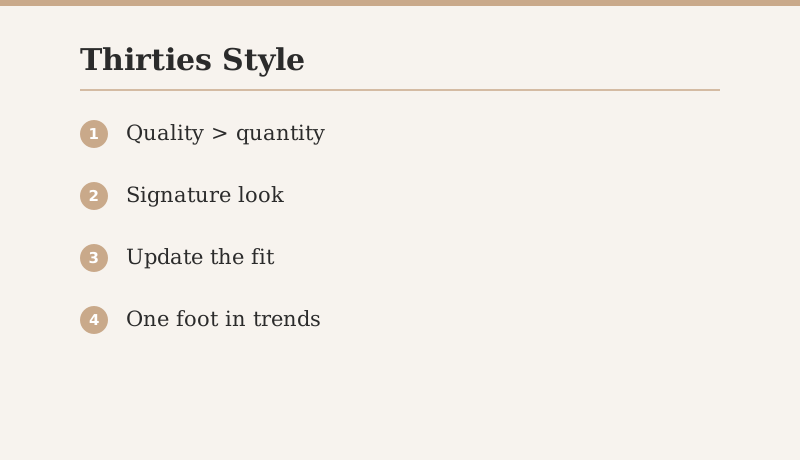
- Find your signature from evidence: photograph a month of outfits, sort by how you felt.
- Name it in one sentence — it makes every purchase a three-second decision.
- Three neutrals, two accents. Coherence is what makes a wardrobe feel bigger.
- Invest slowly in a coat, trousers, shoes and a bag, all within your brief.
- Tailoring is the multiplier: £20 alterations beat £200 purchases.
- Two or three trend pieces a season, filtered through your signature.
Your thirties are the decade the wardrobe finally grows up with you — build it around a point of view and it’ll serve you for years.
Keep Reading
This article is for general styling and informational purposes only. Trends, sizing, availability and pricing may vary by brand and season.